Introduction: Why Your Credit Score is Your Most Valuable Financial Asset
In India's fast-evolving financial ecosystem, your credit score is no longer merely a three-digit metric printed on a bureau statement; it is your financial passport. Whether you are seeking a home loan to purchase your dream apartment in Mumbai or Bengaluru, applying for an unsecured personal loan for a medical contingency, or negotiating the interest rate on a new car loan, Indian banks and Non-Banking Financial Companies (NBFCs) evaluate your creditworthiness through this single number before even reviewing your salary slips.
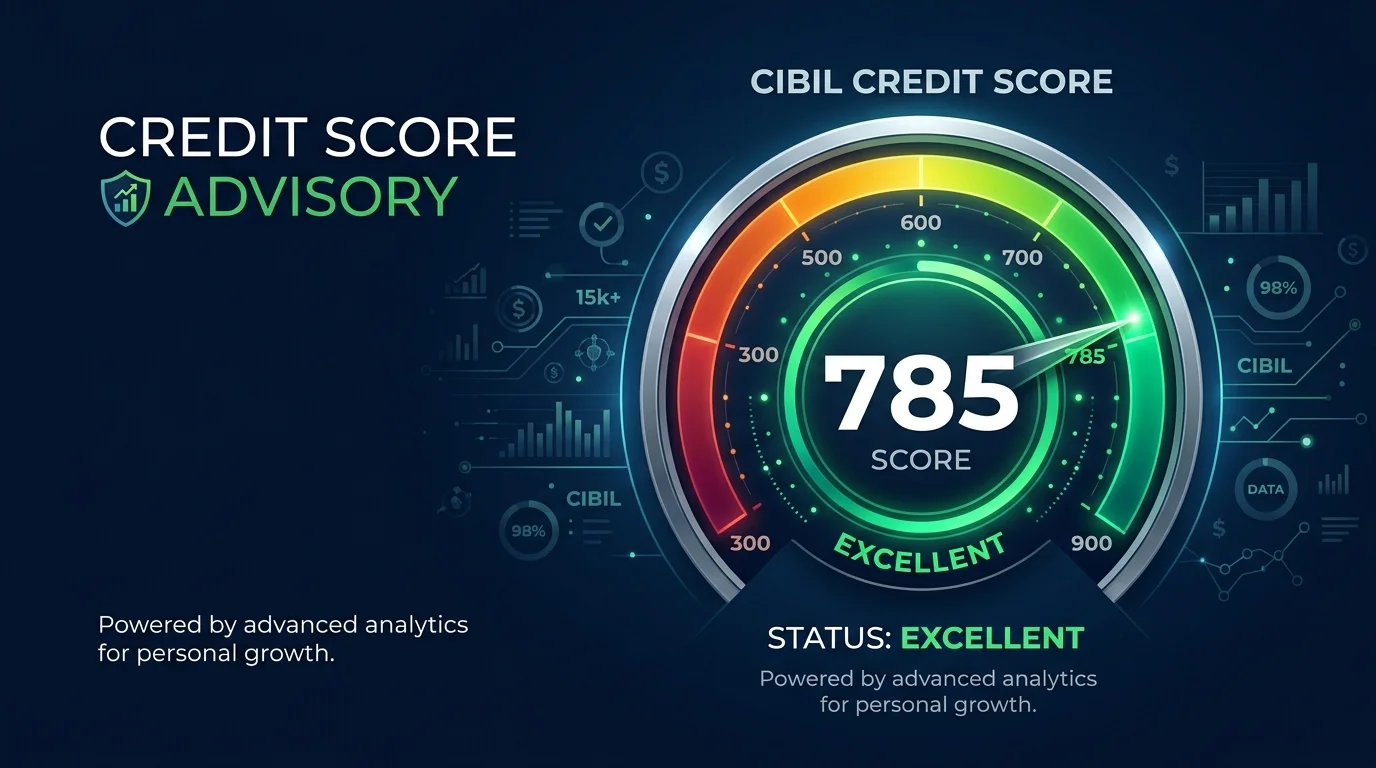
Four primary credit information companies operate under the regulatory supervision of the Reserve Bank of India (RBI): TransUnion CIBIL, Experian India, Equifax India, and CRIF High Mark. While each bureau employs proprietary scoring algorithms, their scores generally range from 300 to 900. A score of 750 or above is universally recognized across Indian lending institutions as the gold standard—often unlocking prime interest rates that can save borrowers lakhs of rupees over long-term loan tenures.
Conversely, a score below 650 can result in steep interest rate markups, mandatory guarantor requirements, or outright loan rejections. If your credit score has suffered due to past missed payments, high credit card utilization, or bureaucratic reporting errors, the good news is that credit repair is entirely feasible. With disciplined habits, knowledge of your legal rights under the Credit Information Companies (Regulation) Act (CICRA 2005), and a strategic execution blueprint, you can systematically rebuild your credit profile from the ground up.
1. Decoding the Credit Score Algorithm: The Five Core Pillars
To fix or improve any metric, one must first master how it is calculated. Credit bureaus like TransUnion CIBIL and Experian evaluate your historical credit behavior across five distinct parameters, each carrying a specific weightage:
1. Payment History (35% Weightage)
Payment history is the foundation of your credit profile. Every equated monthly installment (EMI) and credit card bill payment is recorded by your lenders and transmitted to the bureaus at the end of each billing cycle. Bureaus track this using a metric known as Days Past Due (DPD). A status of '000' indicates that payment was made on or before the due date. Any value such as '030', '060', or '090' reflects late payments and triggers sharp score deductions. Missing even a single EMI payment can wipe out 50 to 80 points overnight.
2. Credit Utilization Ratio (30% Weightage)
Your Credit Utilization Ratio (CUR) measures the percentage of your total revolving credit limit that you are currently using. For example, if you hold two credit cards with a combined credit limit of ₹2,00,000 and your outstanding statement balance is ₹1,00,000, your CUR stands at 50%. Lending algorithms view high utilization as a sign of credit hunger or impending cash flow distress. To maintain a strong score, industry experts recommend keeping overall credit utilization strictly below 30%, and ideally under 15%.
3. Credit History Length and Vintage (15% Weightage)
Credit history length refers to the age of your credit accounts—specifically the age of your oldest active credit card or loan and the average age of all your accounts combined. Lenders place significant trust in borrowers who have demonstrated consistent, responsible repayment behavior over five, ten, or fifteen years. Closing your oldest credit card is one of the most common mistakes borrowers make, as it instantly shrinks your credit history age.
4. Credit Mix: Secured vs. Unsecured Credit (10% Weightage)
Your credit mix evaluates the balance between secured loans (such as home loans, auto loans, or gold loans backed by collateral) and unsecured credit (such as credit cards and personal loans). A healthy, balanced mix shows lenders that you possess the financial capability to handle multiple forms of credit responsibly, rather than relying exclusively on unsecured borrowings.
5. New Credit Inquiries & Hard Checks (10% Weightage)
Whenever you submit a formal application for a credit card, personal loan, or line of credit, the prospective lender performs a "Hard Inquiry" with credit bureaus. Each hard inquiry temporarily knocks off a few points from your score. Submitting five loan applications within a span of two weeks signals desperation to lenders and causes noticeable score erosion. In contrast, checking your own credit report is classified as a "Soft Inquiry" and has zero negative impact on your score.
2. Phase 1: Conducting a Rigorous Multi-Bureau Credit Audit
The journey to rebuilding your credit starts with complete diagnostic visibility. Many borrowers rely solely on their CIBIL score, unaware that a bank evaluating their loan might pull their Experian or Equifax report instead. Discrepancies between bureaus are surprisingly frequent in India.
Key Red Flags to Look for in Your Credit Report
- Phantom Accounts: Loan accounts or credit cards registered under your PAN number that you never applied for or authorized, indicating potential identity theft or data entry errors by banking personnel.
- Incorrect Days Past Due (DPD): Instances where you paid your credit card bill on time, but the bank erroneously reported a 30-day or 60-day delinquency.
- Unreflected Loan Closures: Loans that you fully repaid months or years ago but still appear as "Active" or "Open" because the lender failed to submit the closure update to the bureau.
- "Settled" or "Written-off" Flags: If you paid a one-time settlement amount on an old credit card dispute, banks frequently mark the account status as "Settled" or "Post-Write-off Settled." This tag acts as a severe red flag, warning future lenders that the borrower failed to fulfill their original contractual commitment.
- Inaccurate Personal Identifiers: Misspelled names, outdated addresses, or conflicting date-of-birth records that cause file splitting or cross-linking with another borrower's records.
3. Phase 2: Rectifying Bureau Errors Under CICRA 2005
The Credit Information Companies (Regulation) Act of 2005 (CICRA 2005) is a powerful statute that empowers every Indian citizen to dispute and rectify erroneous or fraudulent data appearing on their credit file. Under Reserve Bank of India guidelines, both credit bureaus and lending institutions are legally mandated to investigate and resolve consumer disputes within 30 days of submission.
Step-by-Step Dispute Escalation Hierarchy
- File an Online Bureau Dispute: Visit the official dispute resolution portals of TransUnion CIBIL, Experian, or Equifax. Provide the precise Account Number, Control Number (ECN / Report Number), and detailed explanation of the discrepancy. Attach payment receipts, bank account statements, and No Objection Certificates (NOC).
- Engage the Lending Institution's Nodal Officer: Simultaneously, write a formal registered email to the Principal Nodal Officer (PNO) or Grievance Redressal Officer of the issuing bank or NBFC. Inform them of the disputed entry and request an internal audit and subsequent rectification to all four credit bureaus.
- Escalate to the RBI Integrated Ombudsman Scheme (2021): If the lender or credit bureau fails to resolve the genuine dispute within 30 days, or dismisses your valid documentation without adequate justification, you have the right to lodge a formal complaint with the RBI Banking Ombudsman via the CMS portal (cms.rbi.org.in). The RBI Ombudsman possesses statutory authority to compel banks to correct credit reporting errors and award financial compensation for mental agony and wrongful credit impairment.
4. Phase 3: Optimizing Credit Utilization and Strategic Debt Repayment
Once erroneous entries are identified and placed under dispute, immediate focus must shift toward mathematical score optimization. Among all actionable levers, reducing credit card balances yields the fastest score improvements, often reflecting within 30 to 45 days.
The "Mid-Cycle Payment" Technique
Most credit cardholders assume that paying their full credit card bill on the payment due date keeps their utilization low. However, credit card companies report your outstanding balance to CIBIL on your Statement Generation Date, not your payment due date. If your credit limit is ₹1,00,000 and you spend ₹80,000 during the month, the bank reports an 80% utilization ratio to CIBIL on the statement date, even if you pay the entire ₹80,000 balance two weeks later.
To overcome this, execute a "mid-cycle payment." Pay down 70% to 80% of your unbilled charges 2 to 3 days before your statement generation date. When the statement is generated, your reported balance will reflect a modest 10% to 15% utilization, generating an immediate positive signal to bureau scoring engines.
Debt Elimination Strategies: Avalanche vs. Snowball
If you carry multiple outstanding personal loans or credit card balances, choose a disciplined payoff strategy:
- Debt Avalanche Method: Make minimum payments on all credit facilities while channeling every surplus rupee toward the account carrying the highest interest rate (typically credit card revolving balances charging 36% to 42% APR). This minimizes total interest outflow and accelerates debt freedom.
- Debt Snowball Method: Target the smallest balance first while paying minimums on others. Eliminating smaller loans quickly provides psychological victories and reduces the total count of active debt lines on your report.
5. Phase 4: Building Positive Credit Momentum from Scratch or After Distress
For individuals recovering from severe financial distress, loan defaults, or those with a "NA" or "NH" (No History) status, standard unsecured credit cards are often unattainable. The most dependable, battle-tested tool for rebuilding credit in India is the Fixed Deposit-Backed Secured Credit Card.
How a Secured Credit Card Rebuilds Credit
Leading Indian banks (such as ICICI Bank, Axis Bank, IDFC FIRST Bank, and Kotak Mahindra Bank) offer credit cards against a modest fixed deposit of ₹10,000 to ₹50,000 with 100% approval rates and no income verification. The card typically carries a credit limit equal to 85% to 90% of your deposit amount.
Use this card for routine monthly expenses (such as utility bills, fuel, or grocery purchases) amounting to no more than 15% to 20% of the limit. Set up an automated auto-debit facility from your savings account to ensure every bill is paid in full 5 days ahead of schedule. Within 6 to 9 months of disciplined usage, the bureau registers a flawless sequence of '000' DPD payment markers, creating fresh upward momentum for your composite score.
6. Common Credit Myths and Fatal Traps to Avoid
Misinformation regarding credit scores is rampant on social media and internet forums. Avoiding counterproductive mistakes is just as vital as practicing positive credit habits:
"Closing old credit cards does not improve your credit score; in reality, it shortens your average account vintage and instantly reduces your total available credit limit, artificially inflating your credit utilization ratio."
- Trap 1: Settling Instead of Closing with Full Payment. Debt recovery agents often tempt stressed borrowers with "one-time settlement" waivers, promising that the loan will be closed. While the collection calls stop, the bank registers the account as "Settled" or "Written Off" in CIBIL. Always aim to convert a settlement into a "Closed" status by paying off the principal amount and obtaining an unconditional No Dues Certificate.
- Trap 2: Co-signing or Guaranteeing Loans Blindly. When you act as a loan guarantor or co-borrower for a friend, sibling, or business partner, you assume 100% joint and several liability for that debt. If the primary borrower defaults or delays their EMI, that exact delinquency is replicated identically onto your personal credit report, instantly damaging your score.
- Trap 3: Applying for Credit Simultaneously Across Multiple Aggregators. Clicking "Apply Now" on multiple financial aggregator platforms sends automated applications to six or seven banks at once. Each bank triggers an independent hard pull on your CIBIL file, creating an appearance of extreme credit desperation that leads to immediate automated underwriting rejections.
- Trap 4: Believing Credit Repair Takes Years. While bankruptcies and severe write-offs remain visible for several years, credit bureau algorithms place disproportionate weight on your most recent 12 to 24 months of behavior. A borrower with past defaults who demonstrates 12 consecutive months of pristine on-time repayments and low utilization will see significant score recovery.
7. The 12-Month Actionable Roadmap to a 750+ Credit Score
Consistency is the defining differentiator in credit score rehabilitation. Follow this structured timeline to systematically elevate your credit standing:
Months 1 to 2: Audit, Dispute, and Stop the Bleeding
- Download comprehensive credit reports from TransUnion CIBIL, Experian, and Equifax.
- Identify every incorrect DPD marker, unclosed account, or erroneous balance.
- Submit formal disputes with all relevant credit bureaus and the concerned bank nodal officers.
- Implement automated calendar reminders or auto-debit mandates for all active loans and credit cards.
Months 3 to 5: Balance Compression and Utilization Control
- Apply the mid-cycle payment strategy to slash reported credit card utilization below 20%.
- Cease all new loan and credit card applications to halt hard inquiries.
- If eligible, request an existing credit card issuer to increase your credit limit without a hard pull, instantly expanding your total denominator.
- Track resolution of your filed disputes and follow up aggressively with bank grievance officers.
Months 6 to 9: Score Consolidation (Targeting 680 to 720)
- Verify that successfully disputed records have been updated to '000' or marked as 'Closed' on bureau files.
- If recovering from zero or damaged credit, introduce a secured credit card and build a sequence of punctual payment markers.
- Continue paying all EMIs on or before the due date without exception.
Months 10 to 12: Achieving and Maintaining the 750+ Prime Milestone
- Review your updated credit reports across all bureaus to verify that your composite score has crossed the 750 threshold.
- Maintain your balanced credit mix and keep credit utilization strictly between 5% and 15%.
- Enjoy access to prime loan rates, pre-approved credit cards, higher loan limits, and minimal processing fees across top-tier Indian financial institutions.
Conclusion: Financial Discipline is the Ultimate Strategy
A credit score is not a static judgment of your past financial misfortunes; it is a dynamic, living reflection of your current financial responsibility. By executing the systematic strategies detailed in this guide—auditing your reports, enforcing your legal rights under CICRA 2005, compressing credit utilization ratios, and cultivating disciplined repayment habits—you possess the tools to restore your creditworthiness and unlock the full potential of your financial future.
CIBIL & Bureau Resolution Questions Answered
Expert answers aligned with RBI guidelines, CICRA Section 21 mandates, and bank recovery protocols.
Credit Consultant
Editorial & Credit Advisory Desk
Official research and credit advisory desk at Credit Consultant. We specialize in statutory bureau dispute resolution under CICRA 2005, CIBIL score revival, and loan sanction facilitation across 30+ leading Indian banks and NBFCs.
Struggling with a Similar Bureau Issue?
Our senior credit advisors analyze your bureau records, identify statutory inaccuracies, and guide you step-by-step to 750+.